The EU's AI Act Just Started Enforcing Itself — What It Actually Requires From Chatbot Apps
Sourced from 22,873 real App Store and Google Play reviews in Appeye's catalogue.

- EU AI Act transparency rules became enforceable
- 2 Aug 2026
- Maximum fine (of global turnover) for prohibited AI practices
- 7%
- AI-chatbot/companion apps in Appeye's own catalogue
- 260
- Their average Appeye score, out of 100 (86 apps with a computed score)
- 78.1
Key takeaways
- EU transparency rules for AI chat and AI-generated content are enforceable from 2 August 2026.
- Fines reach 3% of global revenue for transparency breaches and 7% for prohibited AI practices.
- High-risk conformity assessments slipped to December 2027 — disclosure duties did not.
- Appeye's catalogue has 260 AI-chatbot/companion apps, but only 5 of 22,873 reviews mention not knowing it was AI.
Comparison
On 2 August 2026, the European Commission's AI Office and national market surveillance authorities across EU member states activated full enforcement of the AI Act's transparency requirements. The headline obligation is a simple one: if a user is talking to a chatbot or another interactive AI system, the app has to say so, in the interaction itself, not buried in a terms-of-service page. Deepfakes and AI-generated or altered images, video, and audio now have to carry machine-readable marks so the content can be identified as synthetic, and AI-generated content more broadly has to be labelled as such.
The penalties attached are real enough to change a product roadmap. Violations of the transparency rules can draw fines of up to 3% of an AI provider's global annual revenue; violations involving genuinely prohibited AI practices — the more severe tier — can reach €35 million or 7% of global turnover, whichever is larger. For a consumer-facing app built around an AI companion or assistant feature, that is not a rounding-error risk.
€35mor 7% of turnover, whichever is larger
Not every AI obligation landed on schedule. The EU's Digital Omnibus, signed into law as Regulation 2026/1744 on 27 July 2026, pushed back the conformity-assessment deadline for "high-risk" AI systems — the category covering employment, credit scoring, law enforcement, and healthcare uses — to December 2027. The transparency rules that took effect 2 August were never part of that extension: disclosure and labelling are enforceable now, regardless of what category an app's AI features fall into.
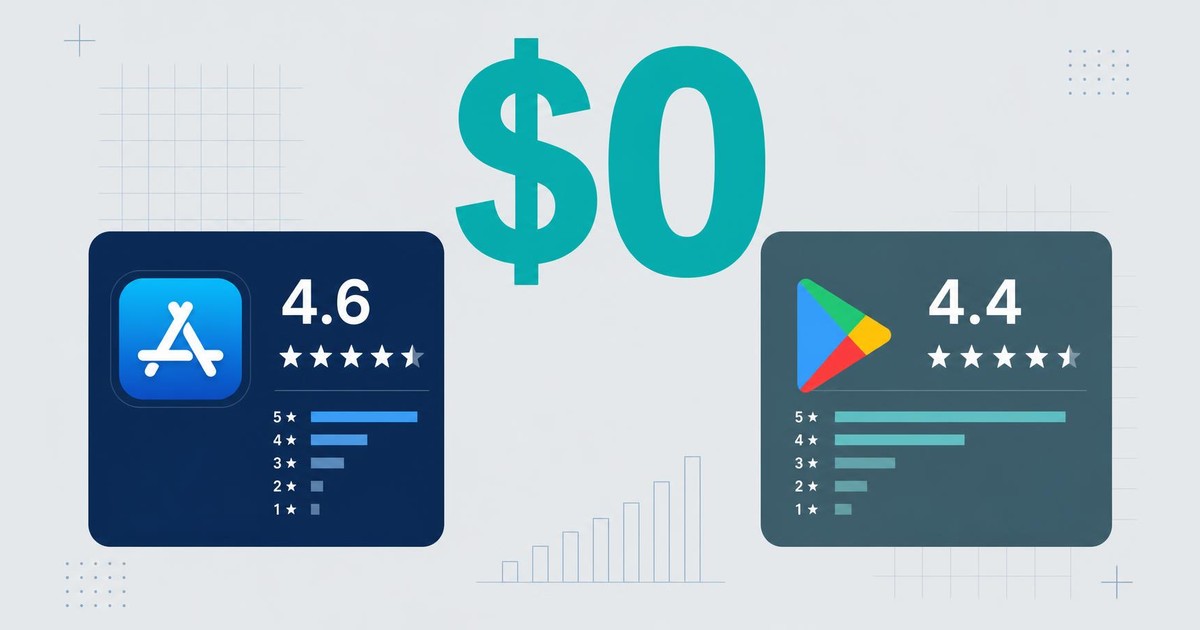
Appeye's own catalogue gives a small, honest window into how much of the app economy this actually touches: 260 apps in the catalogue have "chatbot," "AI companion," or "AI assistant" language in their own name or App Store description, and 86 of those already have a computed Appeye score — averaging 78.1 out of 100, with an average App Store rating of 4.59 stars. We also checked whether users were already flagging AI-transparency issues in their own words — phrases like "didn't know it was AI" or "thought it was a real person" — across the real reviews for these apps. Out of 22,873 reviews, that language showed up in exactly 5. That's too small a signal to call a finding, and we're not going to dress it up as one; if anything, it suggests the disclosure gap the AI Act is targeting hasn't yet become a visible complaint pattern in reviews, whether because most apps already disclose reasonably well or because users simply don't articulate the concern that way.
5 / 22,873reviews mentioning AI-disclosure confusion
Comparison
What the AI Act changes is the downside of getting this wrong going forward — not a retroactive judgment on any specific app in Appeye's catalogue today, and not something Appeye's own scores currently measure at all.
The practical test is no longer 'does this feel honest' — it's 'can a regulator point to the exact line where we said this is AI.'
The practical test for any AI-companion app operating in the EU is no longer "does this feel honest," it's "can a regulator point to the exact line in the product where we said this is AI" — a much more concrete bar, and one enforcement can now actually check.
Which tracked apps have disclosed AI features?
App owners can self-report AI-powered features on their Appeye page. See the running list, alongside what the AI Act's transparency rules actually require.
See disclosed AI appsSee how your app compares
Search Appeye for any app to see its real store-by-store scores, review themes and category rank.
Search appsGet new review-data posts by email
One short email when a new Industry Watch or data-driven post goes live. We send a confirmation link first, and every email has a one-click unsubscribe.
Sources
- European Commission — AI Act application timelinedigital-strategy.ec.europa.eu
- Euronews — EU Digital Omnibus delays high-risk AI ruleseuronews.com
- Appeye — own app catalogue and review dataappeye.ai