
Apple Just Collapsed Three EU App Store Fees Into One — Here's What Changed
Sourced from real external announcements and Appeye's own app catalogue.
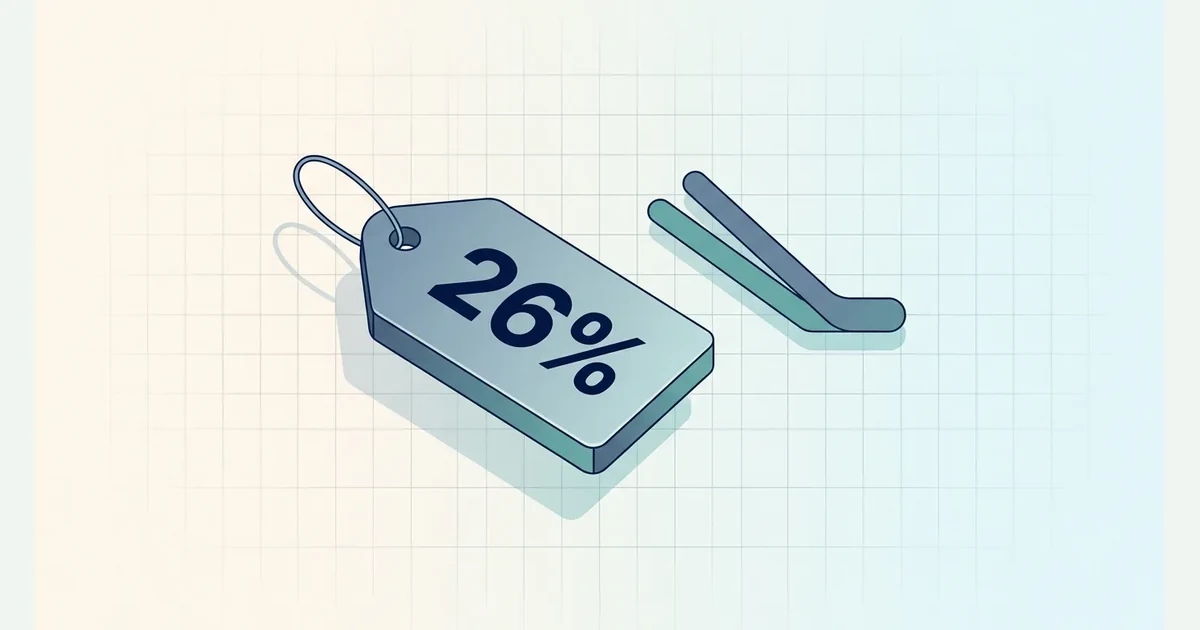
- Apple's new single EU in-app-purchase fee, replacing 3 stacked fees
- 26%
- New terms take effect
- 1 Oct 2026
- Real App Store reviews using pricing-complaint language, across Appeye's catalogue
- 16,718
- Negative reviews naming a subscription or in-app purchase directly
- 34,083
Comparison
On 18 August 2026, Apple rewrote its App Store terms for every developer distributing in the European Union. The layered fee structure that had been in effect since January — a Core Technology Fee, an Initial Acquisition Fee, and a Store Services Fee, stacked on top of each other depending on how an app was distributed — is gone. In its place: one set of business terms, one rate per payment path. For apps that use in-app purchase through the App Store itself, that rate is 26%.
The change followed what Apple describes as "close collaboration" with the European Commission, and it reads less like a voluntary simplification than a settlement. Apple had spent the better part of a year contesting the Commission's reading of the Digital Markets Act — including a legal challenge over the EU's app store rules that Apple lost in July 2026, according to Euronews. Six months earlier, developers were still publicly complaining that Apple was "flouting" the DMA's actual intent even while technically complying with its letter. The August 18 terms are Apple's answer to that pressure, not a preemptive gesture.
The other real change is who gets to compete with the App Store at all. Apple previously required any developer wanting to run an alternative marketplace, or distribute apps via the web, to post a one million euro standby letter of credit from an A-rated financial institution — a bar that quietly excluded almost everyone except large, already-capitalized companies. The new terms accept several alternative ways to demonstrate financial stability: a moderate Dun & Bradstreet score, being publicly traded (or owned by a public company), having received venture funding from an established investor, a completed financial audit, or simply being a government, educational, or nonprofit entity. Developers can sign the new terms starting 18 August; they take effect 1 October 2026.
Underneath a story about fee structure is a much older, more familiar tension: how much of what a developer charges a user is actually going to the platform, not the product. Across Appeye's own catalogue of App Store reviews, 16,718 reviews use pricing-complaint language directly — "too expensive," "overpriced," "rip off" — and a further 34,083 negative reviews specifically reference a subscription or in-app purchase by name. That's not evidence the DMA caused those complaints; it's evidence of the real, pre-existing backdrop this fee reform is landing on. Users already routinely blame the app in front of them for a price that a platform-level fee helped set.
The price a user sees and the price a developer actually nets are set by more layers than either side usually says out loud.
Comparison
Whether a single 26% rate feels like real relief or a fee that's merely easier to explain will depend on what a developer's stack looked like before — some were paying less under the old structure, some more. What's unambiguous is the second change: a meaningfully lower bar to actually compete with Apple's own store in the EU. Real alternative distribution has been technically legal under the DMA for over a year; this is the first time the collateral requirement wasn't itself the obstacle.
None of this changes anything for Appeye's own numbers — App Store and Play Store scores stay computed exactly as they always have, regardless of what a developer pays Apple to be there. But it's a genuine reminder that the price a user sees, and the price a developer actually nets, are set by more layers than either side usually says out loud.
See how your app compares
Search Appeye for any app to see its real store-by-store scores, review themes and category rank.
Search appsGet new review-data posts by email
One short email when a new Industry Watch or data-driven post goes live. We send a confirmation link first, and every email has a one-click unsubscribe.
Sources
- Apple Developer — App Store business terms in the EUdeveloper.apple.com
- MacRumors — Apple reworks EU App Store feesmacrumors.com
- European Commission — Digital Markets Actdigital-markets-act.ec.europa.eu
Related reading
Apple's social-media declaration starts this month, and Education is the most exposed category
The EU's AI Act Just Started Enforcing Itself — What It Actually Requires From Chatbot Apps
What App Review Analytics Actually Costs — And Why Appeye's Free Tier Isn't a Teaser